1 What the training was
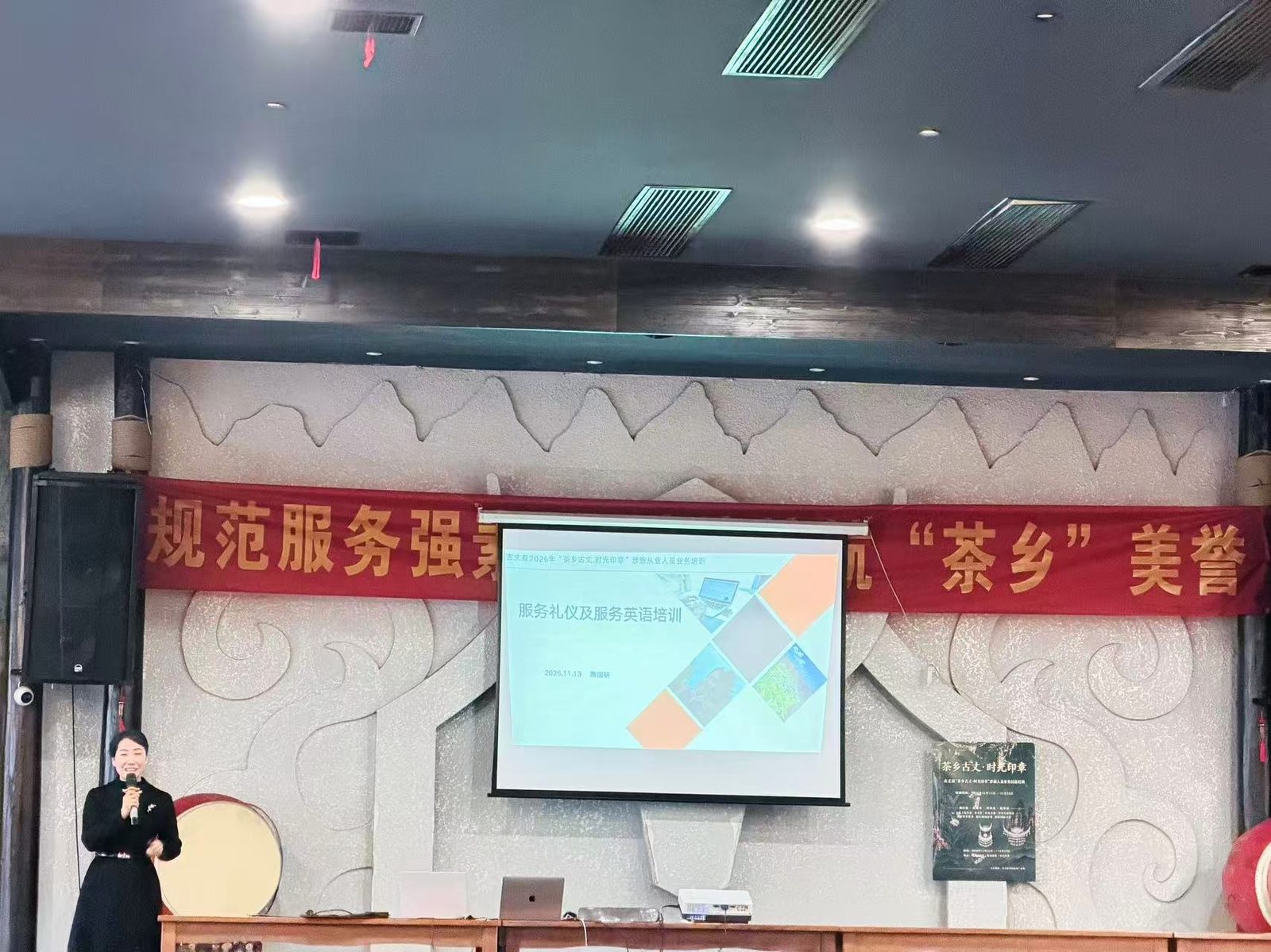
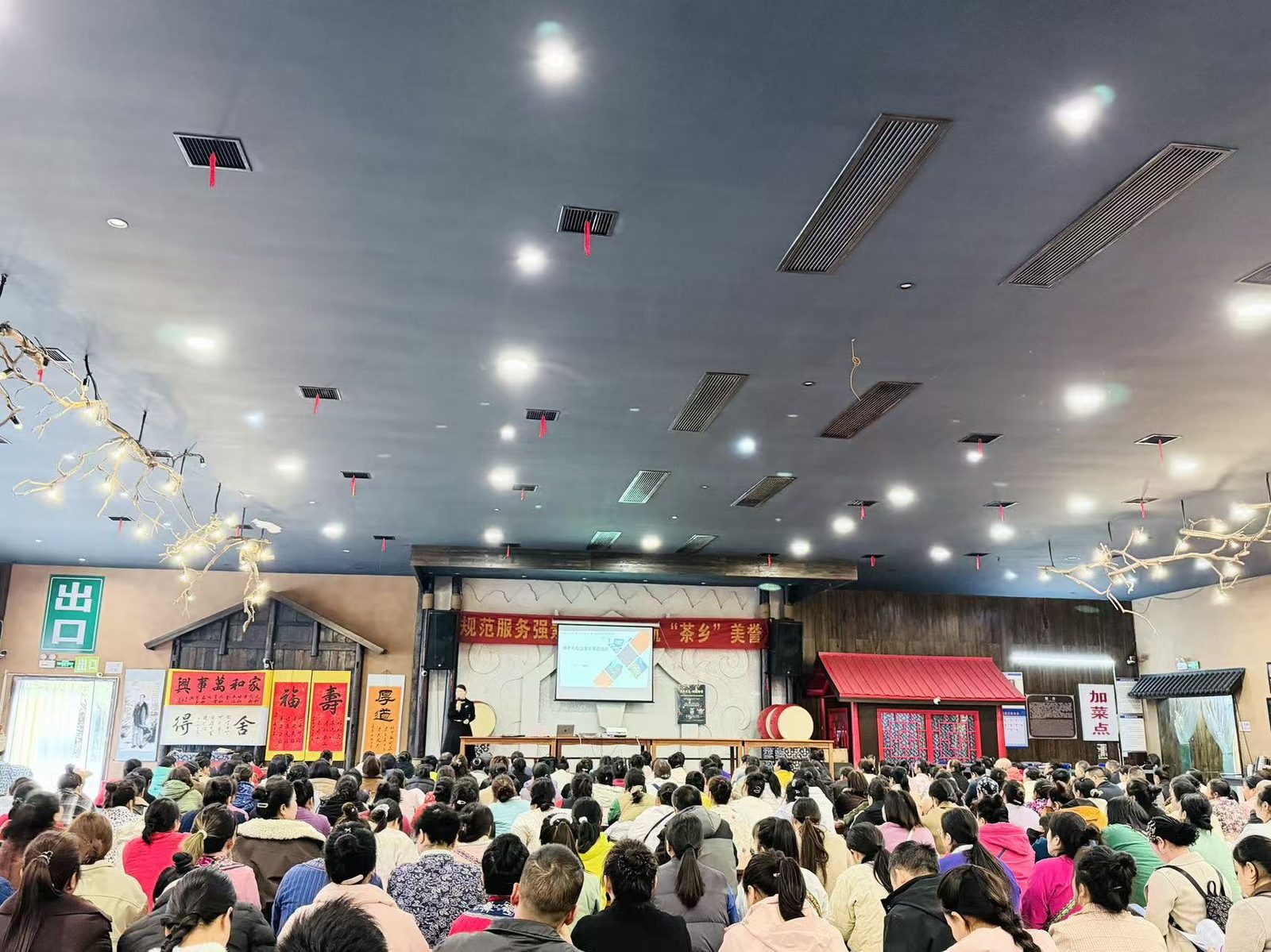
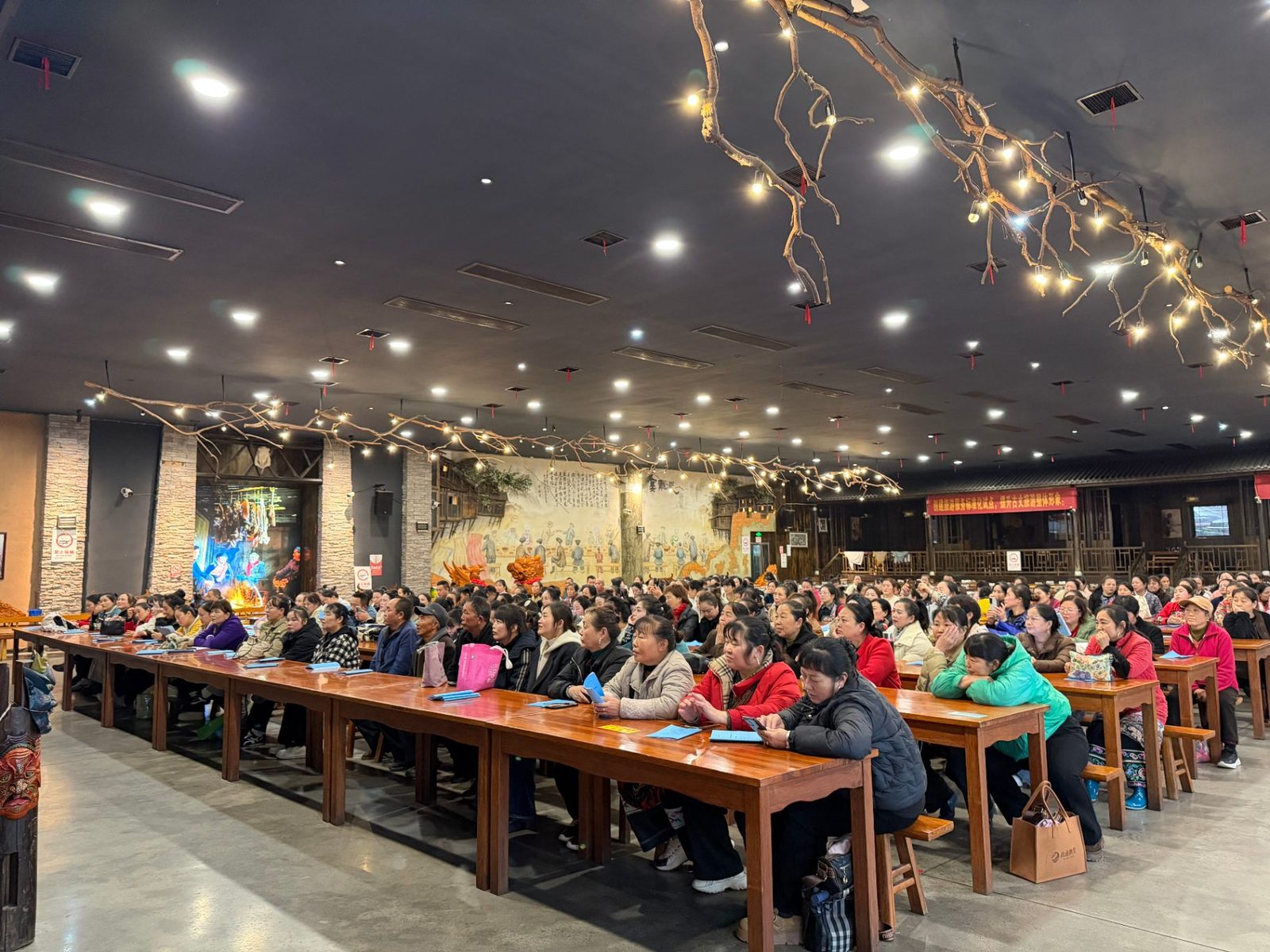
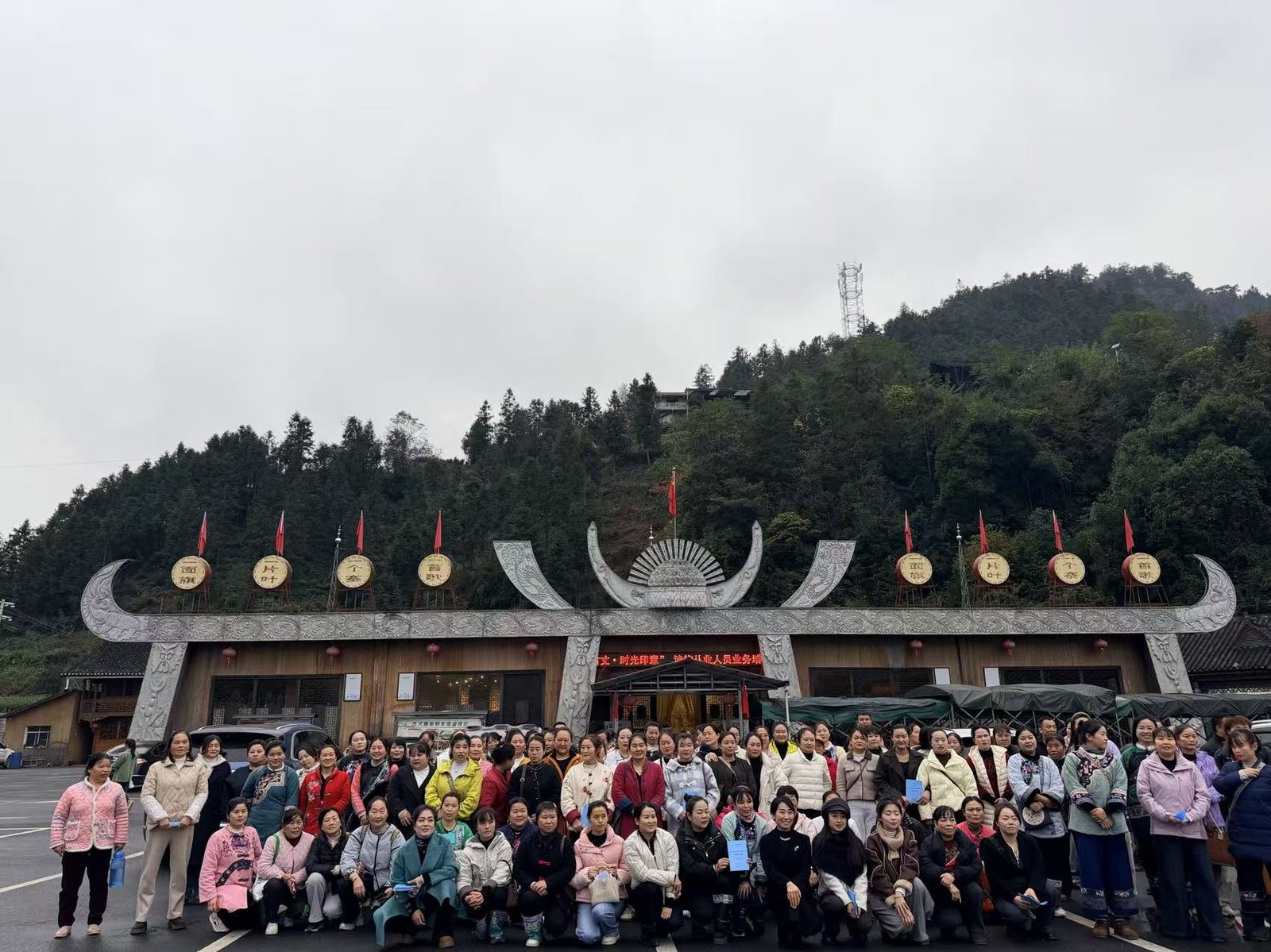
The training belongs to the "Tea Country Guzhang · Stamp of Time" training series; its materials are compiled by the Guzhang County Culture, Tourism and Broadcasting Bureau (printed November 2026). The 13 November session was held at Hangwu Miao Village, with front-line guides and service staff attending.
Two subjects, as on the projector screen: service etiquette and service English — more precisely, service spoken-language for multilingual reception. Every trainee received a Spoken-Language Training Handbook in Chinese, English and Korean.
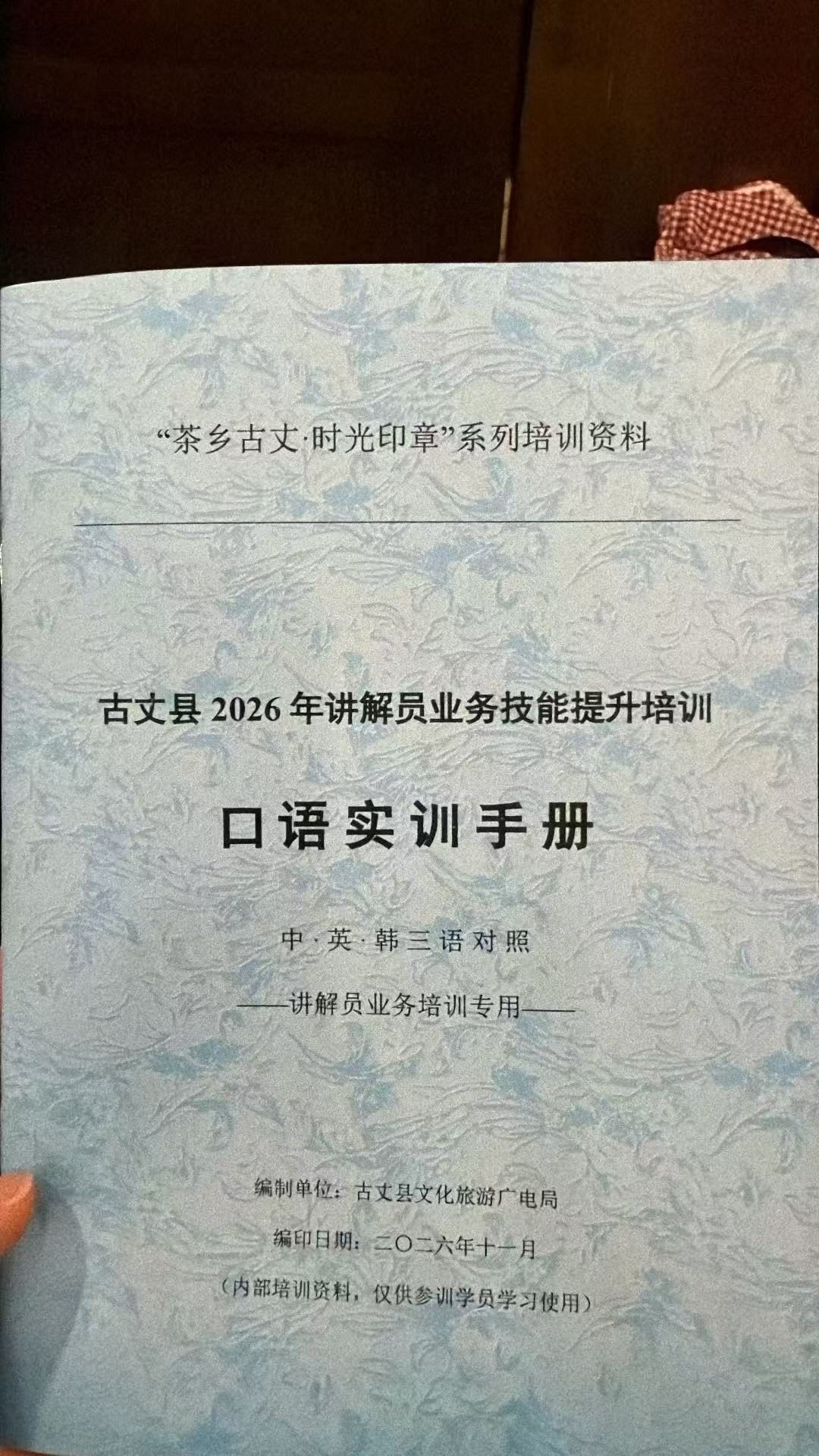
One line on the handbook's cover must be quoted honestly: internal training material, for trainees' study only. So this page describes the training's facts and framework without reproducing the handbook text. What visitors need is available through this website and the guides' own commentary — the same facts, one script.
2 What the handbook trains: the route is the syllabus
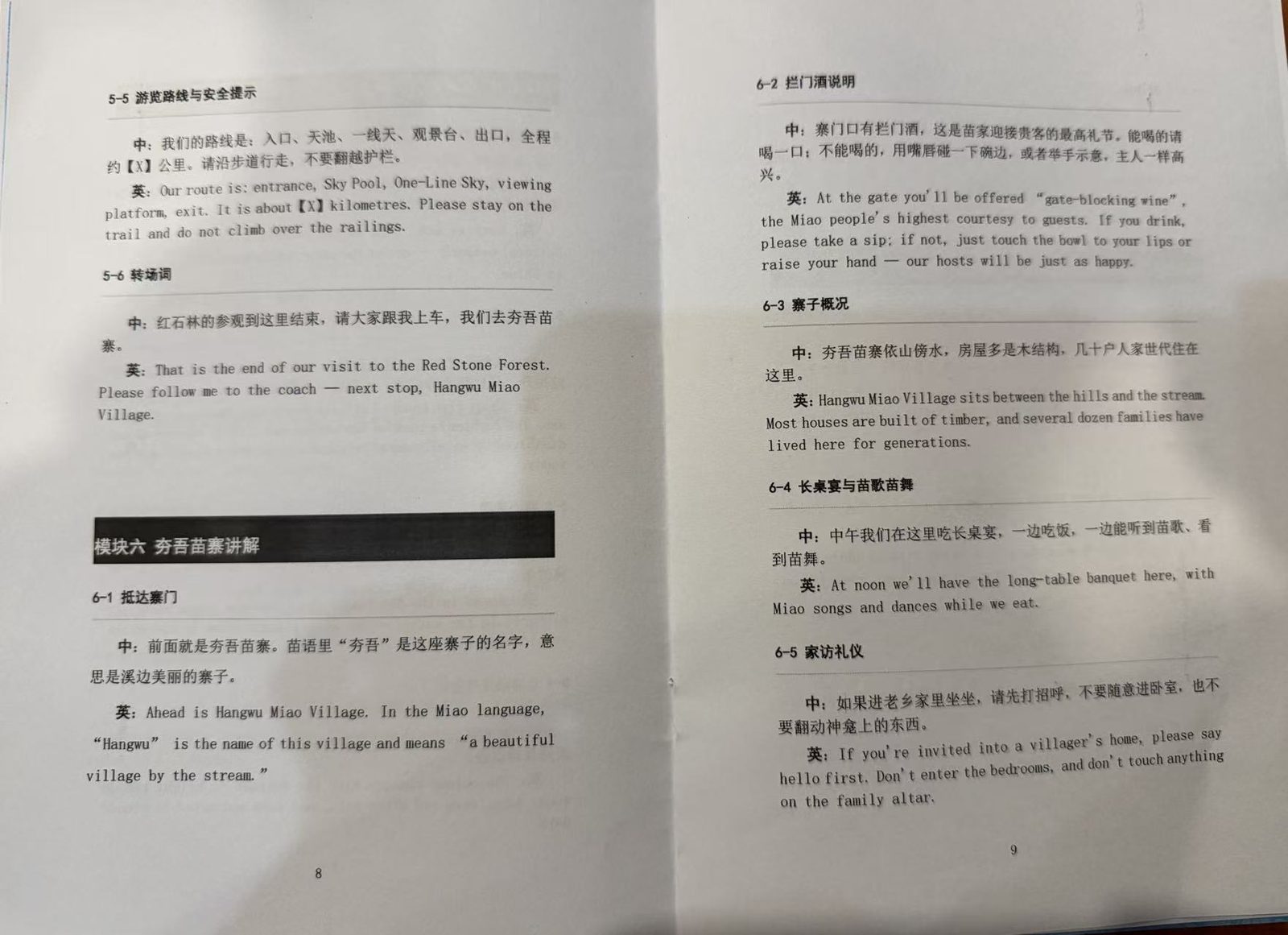
The handbook organizes commentary by route module. For the Hangwu section, the modules cover, in order:
- Arriving at the gate — how the village name is explained;
- The gate-wine — how the welcome custom is presented, and what to do if a guest does not drink;
- Village overview — timber houses on the hillside, generations of residence;
- Long-table feast, songs and dances — how the lunchtime experience is introduced;
- Home-visit etiquette — the manners of being a guest;
- Route and safety reminders — where the trail goes, why railings matter.
The order is telling: safety and etiquette sit at both ends of the route, the stories in between. A guide's first duty is to look after you; the stories come second.
3 Ten high-frequency words, drilled until they roll off the tongue
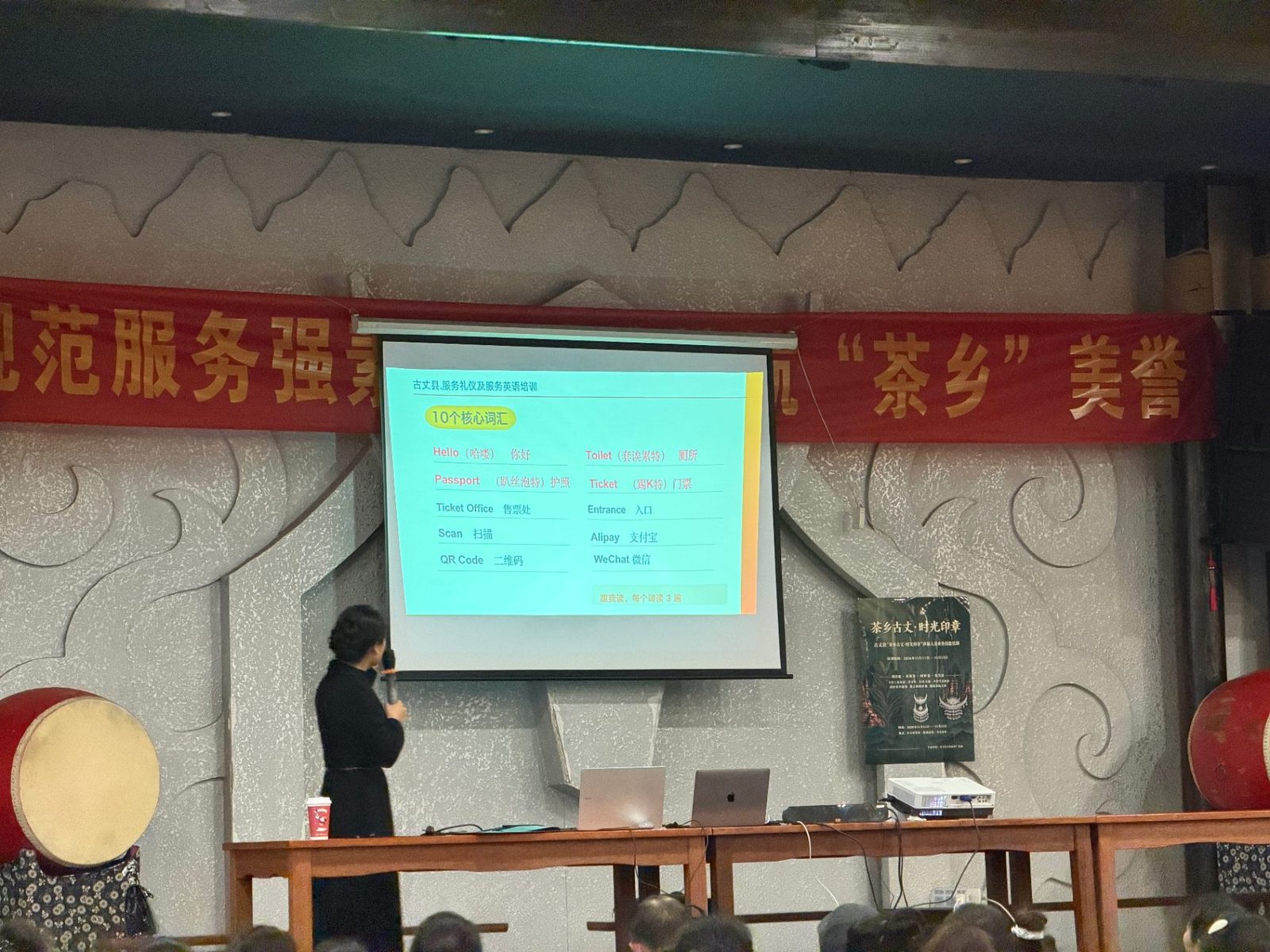
The spoken-language session starts from the words every visitor needs in the first five minutes: hello, passport, ticket, ticket office, toilet, entrance, scan, QR code, Alipay, WeChat — each with English and Korean equivalents, drilled as whole sentences for ticketing, checking in, directions and payment.
Why these languages? Guests arrive from beyond the border every year, and reception capacity is trained, not wished for.
4 What it means for visitors: three things you can verify
First, one script. The same question should get the same answer from any guide — the village name, the gate-wine custom, the feast manners.
Second, written manners. Safety reminders and home-visit etiquette are now procedural, not folklore improvised on the spot.
Third, multilingual reception is being built. The trilingual handbook targets the ticketing-directions-payment bottleneck that inbound visitors hit first.
✅ Ask any guide: "What does Hangwu mean in the Miao language?" — the answer: "a beautiful village by the stream in the canyon";
✅ Ask: "What if I don't want the gate wine?" — the answer: touch the bowl to your lips or raise a hand, hosts equally happy;
✅ Ask at the shop: "Where do I see the weight and labor fee?" — the price tag lists weight, labor fee and total.
Three crisp answers mean the training landed. Vague ones — tell us: 0743-2828787 / 18670439654 (9:00–17:00 CST).
5 The boundary: training covers commentary, not prices
Shopping and aftersales follow the village's existing rules regardless of training: price tags must list weight, labor fee and total; the workshop visit comes before the shopping area; exchanges and repairs follow the receipt; good commentary never replaces the numbers on the tag.
One sentence to remember: the commentary has a script and the service has a rulebook — and you can verify both with three questions.
Facts behind this page
- Training date and venue: 13 November 2026, classroom set in Hangwu Miao Village's long-table feast hall.
- Materials: "Tea Country Guzhang · Stamp of Time" series — Spoken-Language Training Handbook (Chinese · English · Korean), compiled by Guzhang County Culture, Tourism and Broadcasting Bureau, printed November 2026; cover marked as internal material for trainees, not for distribution.
- Subjects: service etiquette and service spoken-language (ticketing, checking-in, directions, payment scenarios; ten core vocabulary items).
- Customs: gate wine is optional — sip, or touch the bowl to your lips, or raise a hand; home visits: greet first, no bedrooms, no altar items.
- Purchase and aftersales rules unchanged: three-item price tag, workshop visit before shopping area, receipt-based claims, on-site public notice prevails. Phone: 0743-2828787 / 18670439654 (9:00–17:00 CST).