1 The gate-wine welcome
At the village gate, hosts in festival dress offer gate wine — a Miao welcome for guests. You are not obliged to drink: take a sip if you like; if you do not drink alcohol, touch the bowl to your lips or simply raise your hand — the hosts take it as the same courtesy. The welcome is often sung antiphonally: the hosts sing a line, guests answer, and only then does the gate "open".
2 The Miao drum dance
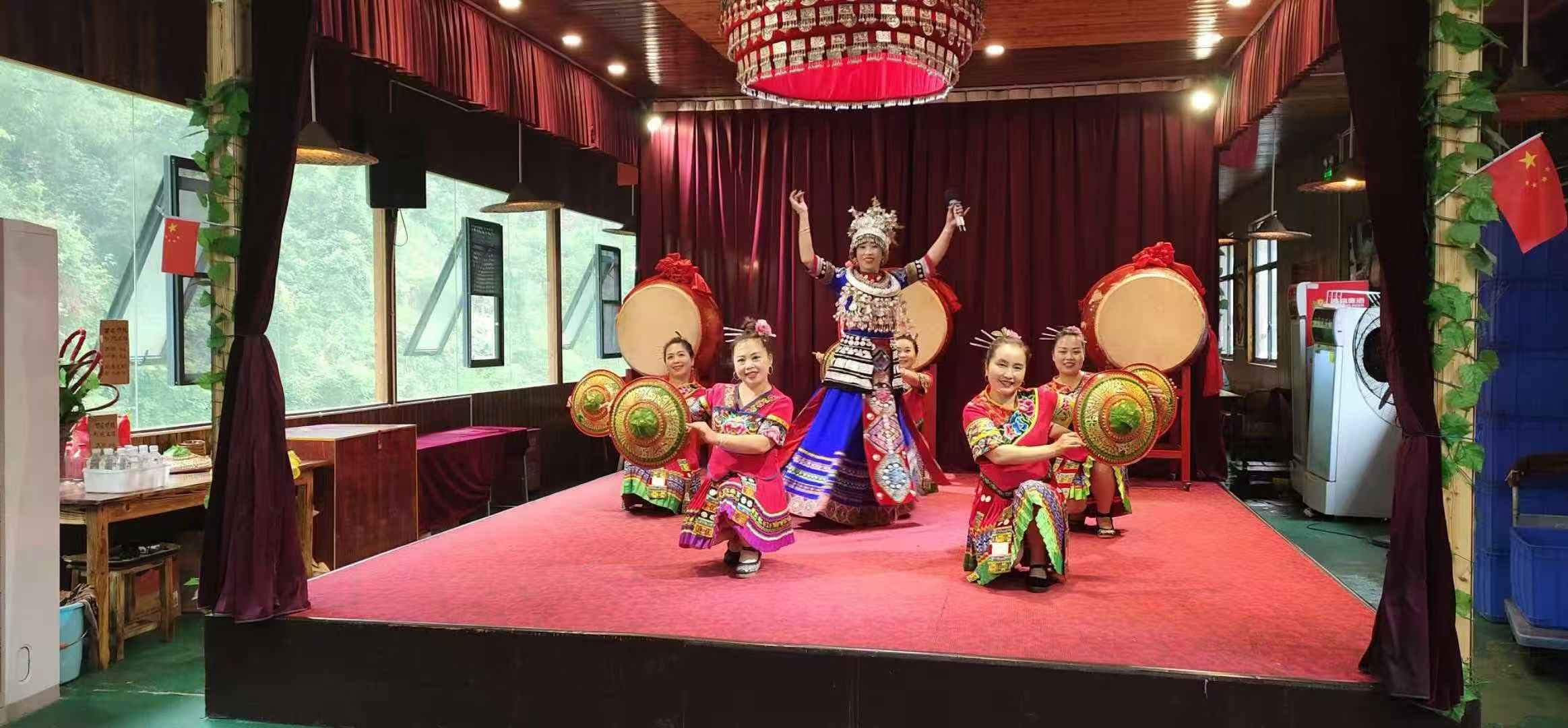
The drum is the heartbeat of a Miao village. The Miao drum dance is performed daily at Hangwu; the drum itself is decorated with silver pendants that ring with every beat. The dance is on China's national intangible cultural heritage list, and the daily performance shows both festival rhythms and everyday gestures — weaving, grooming, harvesting — translated into movement.
3 The crying-marriage show
In traditional Miao weddings, the bride "weeps" before leaving home — a sung farewell to her family that is tender rather than sad. At Hangwu the custom is presented as an interactive show: visitors may be invited to play the groom's family, receive the bride's songs and answer them. It is theatre built on a real custom — the performers explain which parts are tradition and which parts are play.
4 The long-table feast
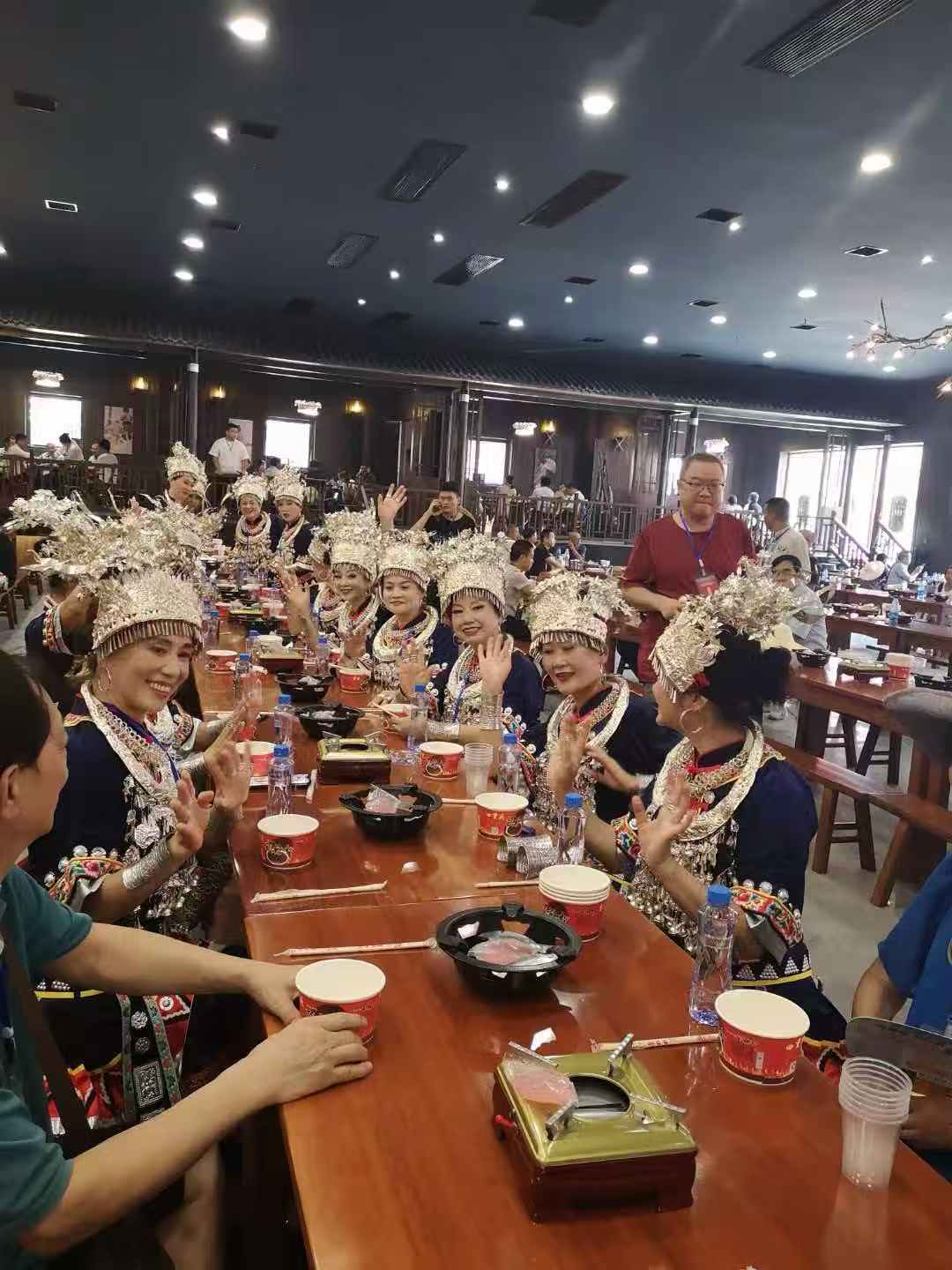
At noon, long tables run through the hall: sit anywhere. Dishes are village staples, Miao songs travel from table to table, and the toast is made with rice wine or tea — your choice. The feast is the easiest place to meet the village: you arrive a stranger, you leave with table-mates.
5 Festivals: April 8th and Ganqiu
The great Miao festivals around here are the April 8th Festival and the Ganqiu Festival — both on China's national intangible cultural heritage list. One honest note for trip planning: National Day week (the first week of October) is a modern Chinese public holiday, not a traditional Miao festival — the village is busiest then, but the traditional calendar belongs to the two festivals above.
6 Wearing silver: festival dress and daily craft
A full Miao festival costume carries many kilograms of silver — neck rings, bracelets, chains and headdresses, much of it made with the forging technique described on the heritage silver page. In the village you can see the craft that makes festival dress possible, and buy everyday pieces made by the same hands.
7 Visiting a Miao home: the etiquette
- Greet the family before entering — a smile and "nihao" goes a long way;
- do not enter the bedrooms uninvited;
- do not touch items on the family altar;
- accept tea or wine offered to you with both hands, or politely decline — either is fine.